Job Hazard Analysis (JHA) is one of the most powerful tools within an ISO 45001 occupational health and safety management system. When implemented correctly, it helps organizations identify hazards before incidents occur and design effective controls to protect workers.
Unfortunately, many organizations treat JHAs as a paperwork exercise created during implementation and rarely revisited afterward. Over time, the documents drift away from real operations, and hazards that were once controlled begin to reappear.
The result is a dangerous gap between documented safety procedures and the risks employees actually face.
ISO 45001 requires organizations to take a systematic approach to hazard identification and risk assessment. Understanding where JHAs commonly fail is the first step toward building a safer and more resilient workplace.
What ISO 45001 Requires for Hazard Identification
ISO 45001 requires organizations to establish processes for identifying hazards and assessing risks associated with their activities. This includes considering:
- Routine operations
- Non-routine activities
- Maintenance and equipment changes
- Human factors
- Emergency situations
The goal is not simply to document hazards, but to ensure that effective controls are implemented and maintained.
Job Hazard Analysis is one of the most practical methods for achieving this requirement because it evaluates risk at the task level, where incidents often originate.
The Most Common JHA Mistakes
Despite their importance, JHAs frequently fail to prevent incidents due to several recurring issues.
Generic Hazard Lists
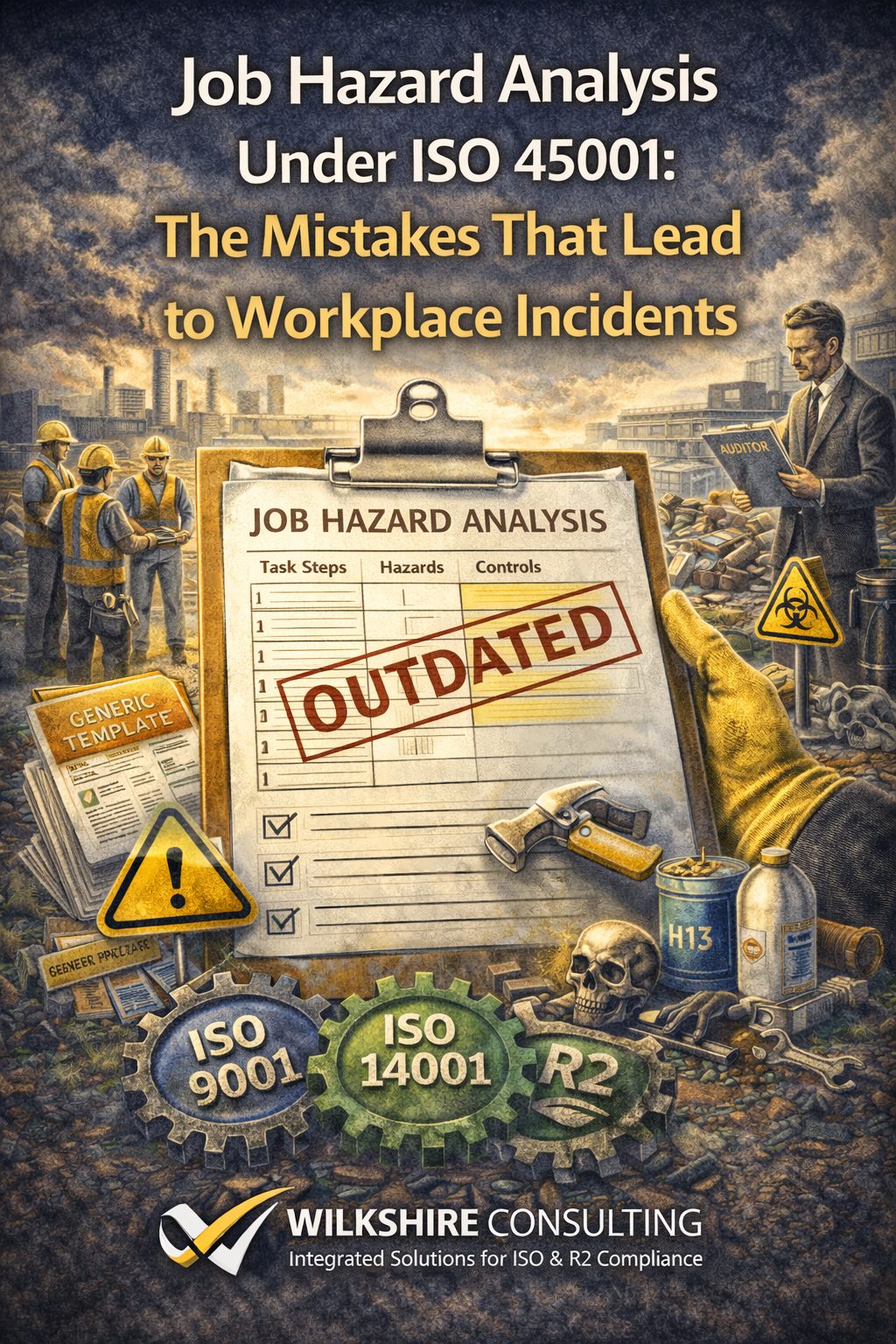
One of the most common problems is the use of generic templates copied across multiple job roles. These templates often list broad hazards such as “slips, trips, and falls” without identifying the specific conditions that create those risks.
Generic JHAs may appear complete on paper but provide little real guidance for workers performing the task.
Effective hazard analysis must reflect the actual environment, equipment, and procedures used in each operation.
Failure to Involve Workers
Frontline employees often understand operational hazards better than anyone else. Yet in many organizations, JHAs are developed solely by supervisors or safety personnel.
This approach misses critical insights.
Workers can identify:
- Task variations that introduce risk
- Equipment behaviors that are not documented
- Shortcuts that employees may take under pressure
ISO 45001 emphasizes worker participation because safety systems are far more effective when employees contribute to hazard identification.
Treating JHAs as Static Documents
Work environments change constantly. Equipment is upgraded, new materials are introduced, and production demands fluctuate.
When JHAs are created once and never updated, they quickly become outdated.
Organizations should review JHAs whenever:
- Processes change
- New equipment is introduced
- Incidents or near-misses occur
- Work conditions evolve
Continuous review ensures hazard analysis remains relevant.
Focusing Only on Obvious Hazards
Many JHAs focus on visible hazards such as moving machinery or chemical exposure. While these are important, less obvious risks can be equally dangerous.
Examples include:
- Ergonomic strain from repetitive tasks
- Fatigue during extended shifts
- Distractions in high-noise environments
- Maintenance activities involving temporary workarounds
ISO 45001 encourages organizations to consider human factors and system interactions, not just physical hazards.
Find out What Auditors Actually Want to See in this blog:
ISO 9001 Management Review: What Auditors Actually Want to See
The Purpose of Job Hazard Analysis
The ultimate goal of a JHA is not documentation — it is risk reduction.
Effective hazard analysis leads directly to controls such as:
- Engineering safeguards
- Safe work procedures
- Equipment maintenance requirements
- Training programs
- Personal protective equipment (PPE)
If a JHA identifies hazards but does not result in improved controls, the process is incomplete.
Integration Strengthens Safety Systems
Workplace safety does not exist independently of other operational risks.
For example:
- Equipment failures may affect product quality (ISO 9001)
- Chemical hazards may impact environmental compliance (ISO 14001)
- Electronic waste processing may introduce safety and environmental risks simultaneously (R2v3)
Organizations operating integrated management systems benefit from aligning hazard identification with broader operational controls.
This approach reduces duplication and ensures that safety considerations are incorporated into overall risk management.
Learn more about ISO 14001 and why it isn’t Just Environmental Compliance - Blog
ISO 14001 Isn’t Just Environmental Compliance — It’s Risk Management
Auditors Look for Evidence of Effective Hazard Control
During ISO 45001 audits, certification bodies evaluate whether:
- Hazards are systematically identified
- Risk assessments reflect real operations
- Controls are implemented and effective
- Workers understand safety procedures
Auditors often verify JHAs by speaking directly with employees performing the task. If employees describe procedures that differ from documented hazard controls, it indicates that the system may not be functioning effectively.
The Best JHAs Are Practical and Accessible
Successful hazard analyses share several characteristics:
- They are easy for employees to understand
- They focus on real operational risks
- They are regularly reviewed and updated
- They involve worker participation
- They link directly to operational controls
When JHAs are integrated into daily operations, they become living safety tools rather than compliance documents.
How Wilkshire Consulting Helps Strengthen Safety Systems
At Wilkshire Consulting, we help organizations implement ISO 45001 safety management systems that focus on practical hazard control.
Our approach emphasizes:
- Real-world job hazard analysis
- Worker participation in safety processes
- Integration with quality, environmental, and R2 systems
- Continuous improvement of operational controls
The goal is not simply to pass an audit, but to build safety systems that protect employees and support operational reliability.
Because effective safety management begins long before an incident occurs — it begins with identifying hazards where the work actually happens.