Most organizations treat audits as a checkpoint.
They prepare, go through the certification audit, address findings, and move forward.
But what many don’t realize is that by the time issues are identified during a certification audit, the cost of fixing them is already higher — sometimes significantly higher — than it needed to be.
This is where pre-audits come in.
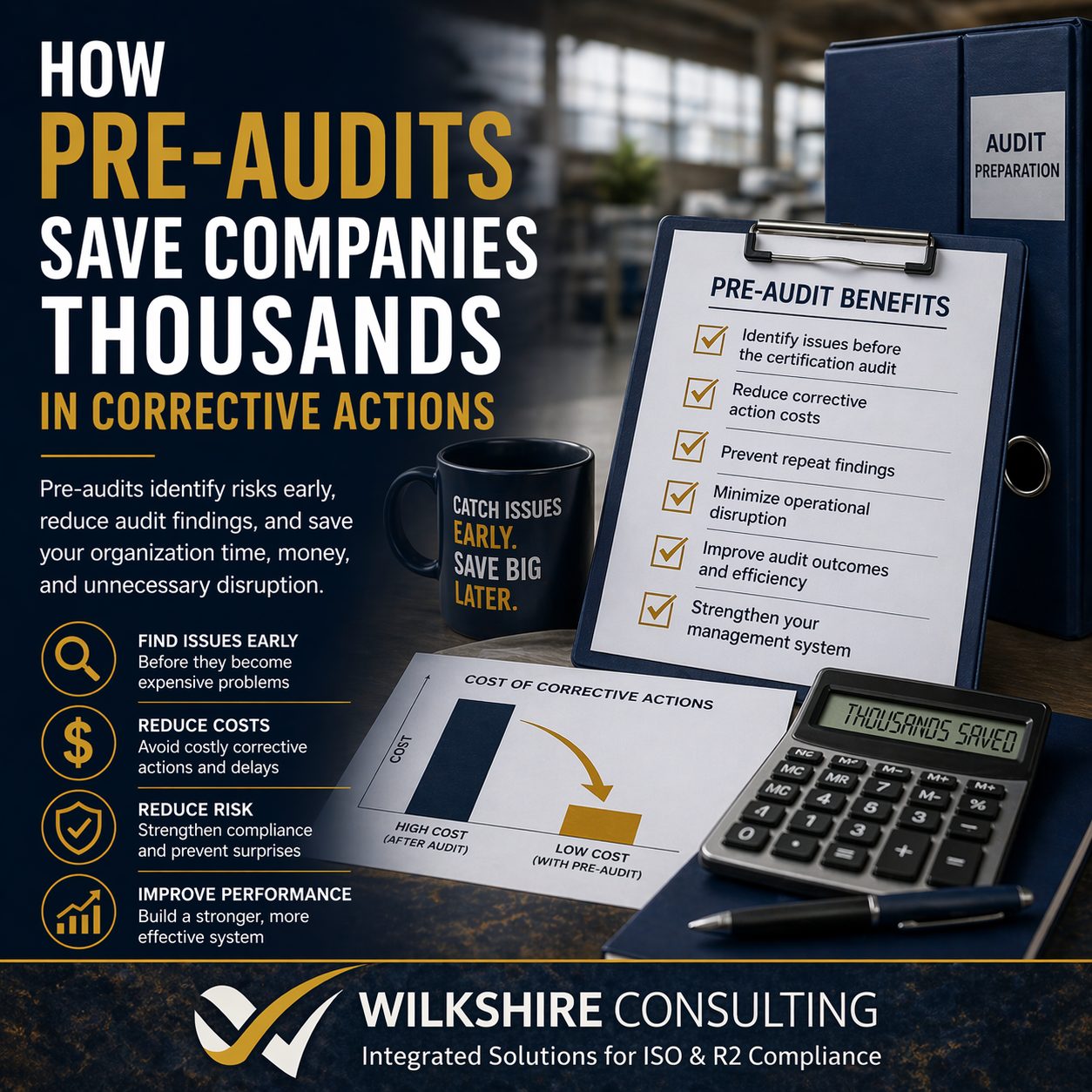
Pre-audits are not just a preparation step. They are a risk-reduction strategy that helps organizations identify weaknesses early, reduce corrective action costs, and improve audit outcomes.
The Hidden Cost of Waiting for the Audit
When organizations rely solely on certification audits to identify issues, they are operating in a reactive mode.
By that point:
- Processes have already been running incorrectly
- Documentation gaps have accumulated
- Employees may be following inconsistent practices
- Risks may have gone unnoticed for months
And most importantly — the cost of fixing these issues increases over time.
A small issue caught early might take hours to fix.
The same issue identified during an audit might require:
- Formal corrective action
- Root cause analysis
- System-wide changes
- Follow-up audits
That’s time, money, and operational disruption.
What a Pre-Audit Actually Does
A pre-audit simulates a real certification audit — but without the risk of formal findings.
It evaluates:
- Process effectiveness
- Documentation accuracy
- Employee awareness
- Record completeness
- System alignment across departments
But more importantly, it identifies issues before they become audit findings.
The Difference Between Pre-Audits and Internal Audits
Many organizations assume their internal audit program is enough.
While internal audits are essential, they often differ from pre-audits in several ways:
Internal Audits
- Conducted by internal staff
- May follow familiar patterns
- Sometimes avoid high-risk areas
- Focus on maintaining compliance
Pre-Audits
- Conducted with an external, objective perspective
- Simulate real audit pressure
- Target high-risk areas
- Identify issues internal teams may overlook
Pre-audits provide a level of objectivity and realism that internal audits often cannot.
The Most Expensive Audit Findings
Not all findings carry the same cost.
The most expensive ones typically involve:
Systemic Issues
Problems affecting multiple processes or departments often require large-scale changes.
Repeat Findings
When issues recur, certification bodies increase scrutiny — and corrective actions become more complex.
Documentation Misalignment
When procedures don’t match reality, organizations must update documentation, retrain employees, and verify implementation.
Data Security or Compliance Gaps (R2v3)
Failures in these areas can affect customer trust, contracts, and regulatory standing.
Pre-audits are designed to identify these risks early — when they are still manageable.
Learn What Regulators vs. ISO Auditors Actually Focus On below:
Environmental Audits: What Regulators vs. ISO Auditors Actually Focus On
Pre-Audits Reduce Operational Disruption
One of the biggest hidden costs of audit findings is disruption.
Corrective actions often require:
- Process changes
- Additional training
- Management attention
- Follow-up verification
All of this pulls resources away from daily operations.
By identifying issues early, pre-audits allow organizations to:
- Plan improvements
- Implement changes gradually
- Avoid last-minute corrections
This results in smoother operations and less stress across the organization.
Pre-Audits Improve Employee Confidence
Audits can create uncertainty among employees, especially if they are unsure how well the system is functioning.
Pre-audits help:
- Reinforce expectations
- Identify training gaps
- Build familiarity with audit processes
When employees are confident, audits run more smoothly — and auditors notice.
Strong Systems Don’t Need Last-Minute Preparation
Organizations that rely on last-minute audit preparation often:
- Rush to update documentation
- Conduct quick internal reviews
- Focus on appearance rather than function
Pre-audits shift the focus from preparation to performance.
Instead of asking: “Are we ready for the audit?”
Organizations begin asking: “Is our system working consistently?”
That shift makes all the difference.
Do you need to know what is coming on the new ISO 9001:2026 revision? Read below:
ISO 9001:2026 Is Coming – What Businesses Need to Know Now
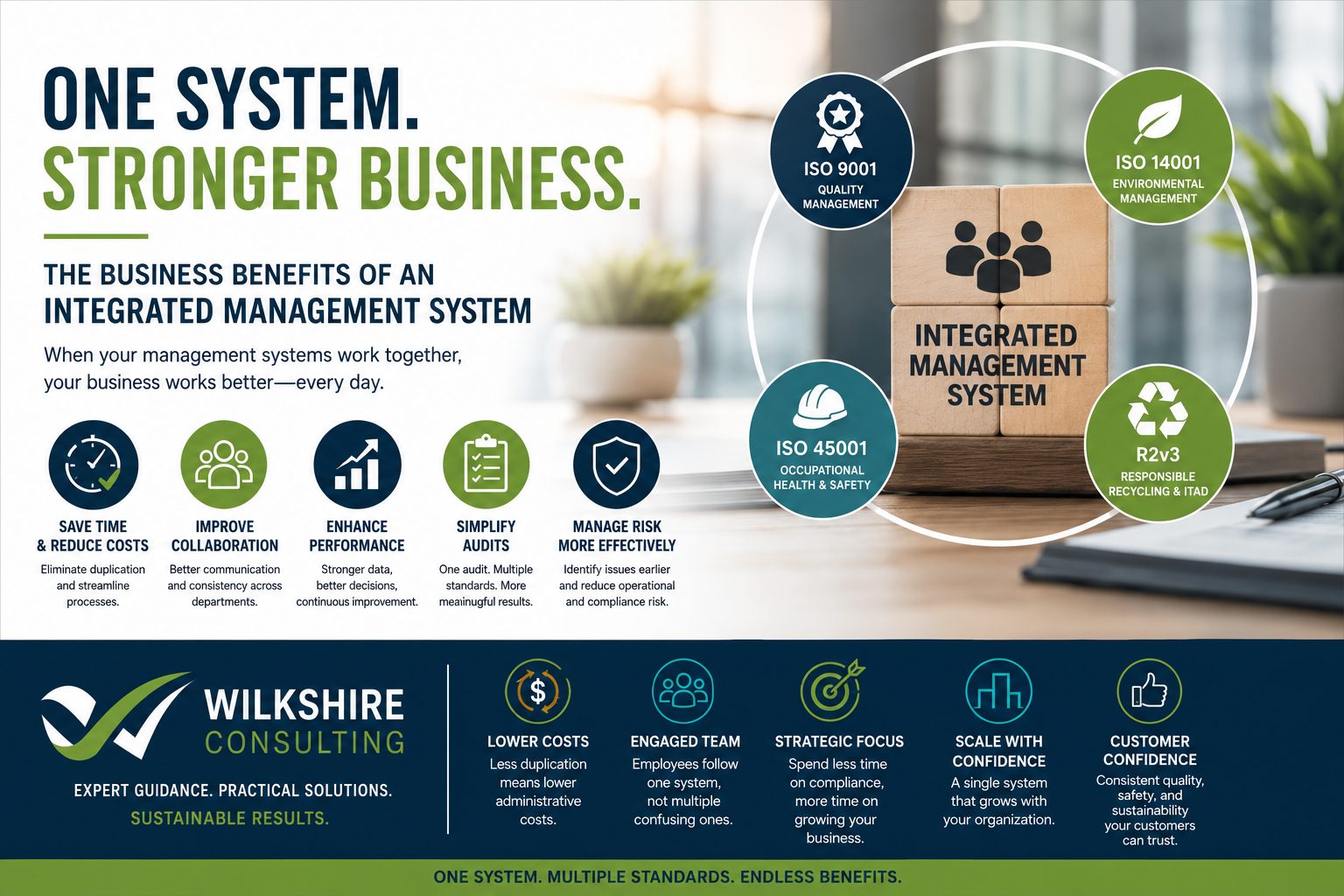
Pre-Audits Support Integrated Systems
Organizations managing:
- ISO 9001
- ISO 14001
- ISO 45001
- R2v3
…benefit even more from pre-audits.
Why?
Because integrated systems introduce complexity:
- Multiple standards
- Overlapping requirements
- Shared processes
Pre-audits help ensure:
- Alignment across standards
- Consistent implementation
- No gaps between systems
This reduces audit risk across all certifications — not just one.
The ROI of Pre-Audits
When done correctly, pre-audits deliver measurable return on investment by:
- Reducing corrective action costs
- Preventing repeat findings
- Minimizing operational disruption
- Improving audit outcomes
- Strengthening system performance
Organizations that invest in pre-audits consistently experience fewer findings and smoother audits.
How Wilkshire Consulting Helps Organizations Prepare the Right Way
At Wilkshire Consulting, we conduct pre-audits that go beyond checklist reviews.
Our approach focuses on:
- Simulating real audit conditions
- Identifying high-risk gaps
- Evaluating system effectiveness
- Strengthening corrective action processes
- Aligning ISO and R2 systems
We don’t just help organizations prepare for audits.
We help them build systems that perform under audit conditions.
Final Thought
Audit findings are not just compliance issues — they are business costs.
The later they are identified, the more expensive they become.
Pre-audits allow organizations to:
- Catch issues early
- Reduce risk
- Improve performance
- Avoid unnecessary cost
Because the goal isn’t just to pass the audit.
It’s to do it efficiently — with a system that works.