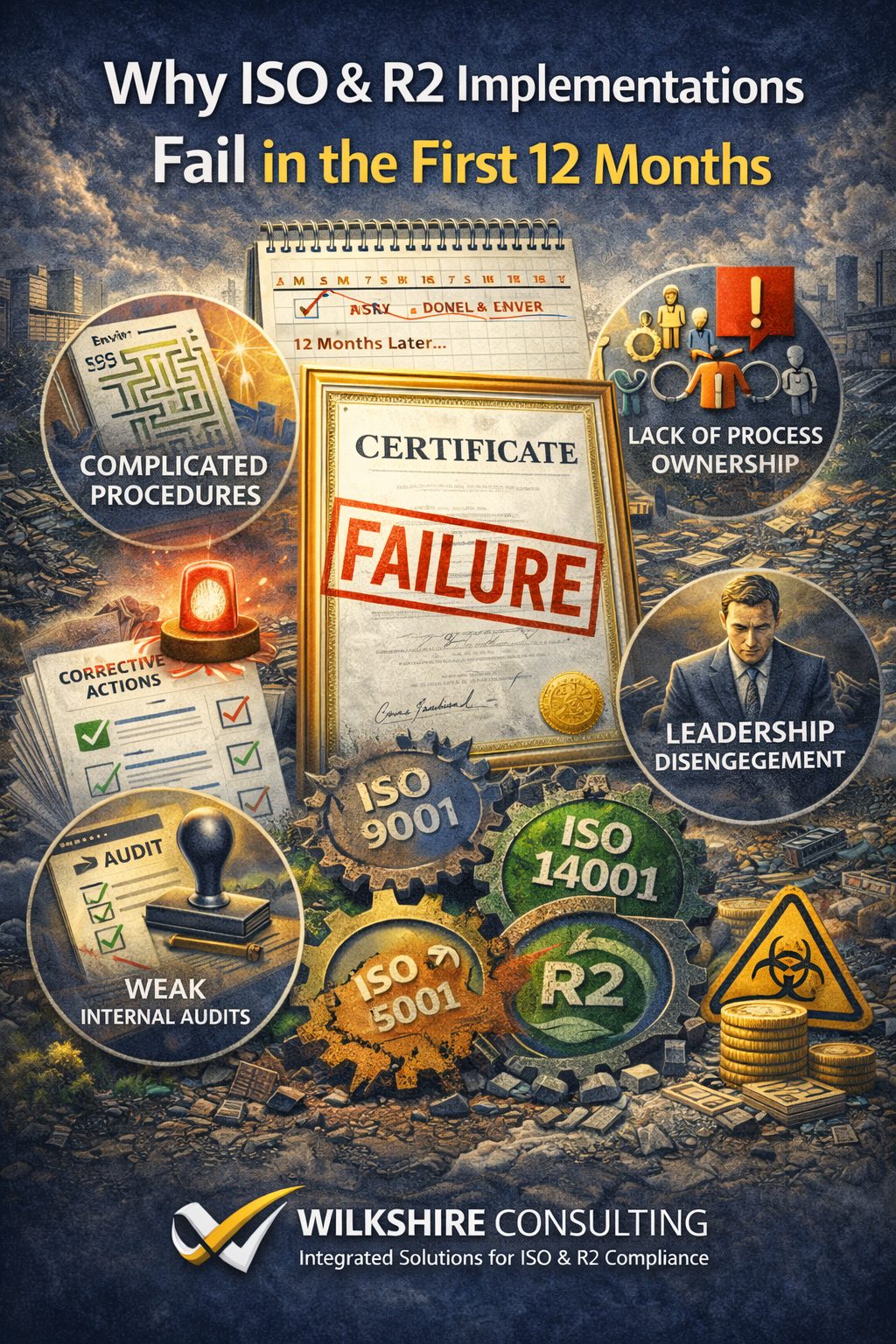
Many organizations achieve certification — and then slowly lose control of their management system.
The documentation exists. The certificate is framed. The audit passed.
And yet, within 12 months:
- Corrective actions pile up
- Internal audits become rushed exercises
- Procedures drift from actual practice
- Leadership disengages
- Surveillance audits produce unexpected findings
Why does this happen?
Because implementation is treated as a project — not a structural change.
Certification Is a Milestone, Not Stability
The period immediately after certification is the most vulnerable phase of any ISO or R2 system.
During implementation, organizations operate in “build mode.” There is focus, urgency, and consultant support.
After certification:
- Attention shifts back to production
- Compliance ownership narrows
- Documentation maintenance slows
- Improvement stalls
Without intentional system ownership, entropy sets in.
Do you need to know what is coming on the new ISO 9001:2026 revision? Read below:
ISO 9001:2026 Is Coming – What Businesses Need to Know Now
The Top 6 Reasons Implementations Collapse
1. Overcomplicated Documentation
Many systems are built with:
- Excessive procedures
- Redundant forms
- Overly technical language
Complex systems are harder to maintain. When employees don’t understand documentation, they stop using it.
Simplicity improves sustainability.
2. Lack of Process Ownership
When management systems are “owned” by one compliance manager, sustainability declines.
ISO and R2 require distributed ownership:
- Process owners
- Departmental accountability
- Leadership review
Without defined ownership, responsibilities blur.
3. Weak Internal Audit Programs
Internal audits should:
- Identify gaps early
- Validate control effectiveness
- Drive improvement
Instead, many organizations:
- Rush audits before surveillance
- Use generic checklists
- Avoid probing uncomfortable areas
This weakens system integrity.
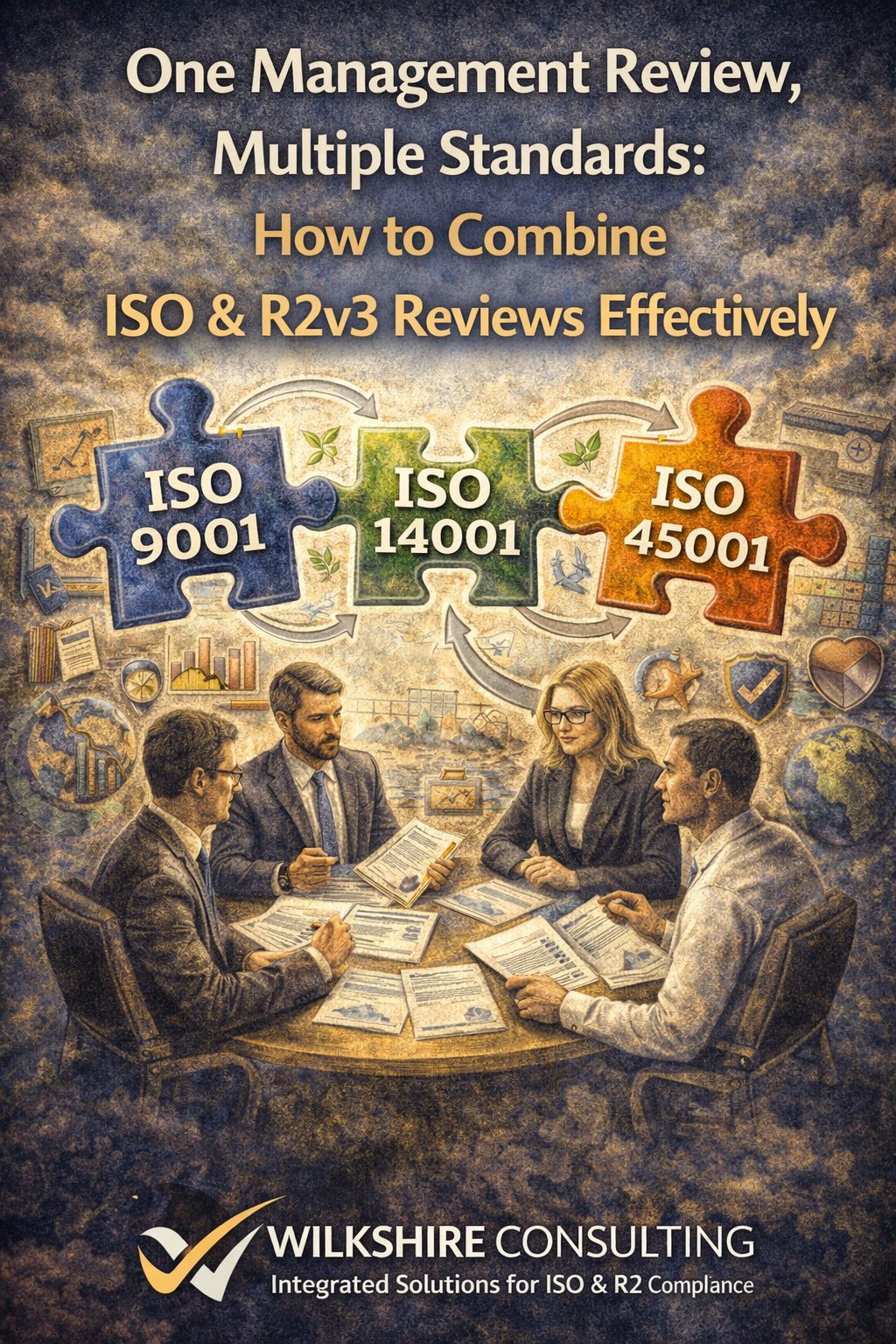
4. Management Review Becomes a Formality
Management review is designed to:
- Evaluate performance trends
- Review risks and opportunities
- Allocate resources
When it becomes a checkbox meeting, the system stagnates.
5. Corrective Actions Address Symptoms, Not Causes
Superficial corrective actions create repeat findings.
Effective corrective action:
- Identifies root causes
- Modifies processes
- Verifies effectiveness
Without this discipline, issues resurface.
6. Systems Are Not Integrated
Organizations running ISO 9001, ISO 14001, ISO 45001, and R2 separately experience:
- Redundant processes
- Audit fatigue
- Conflicting documentation
- Increased maintenance cost
Integration strengthens sustainability.
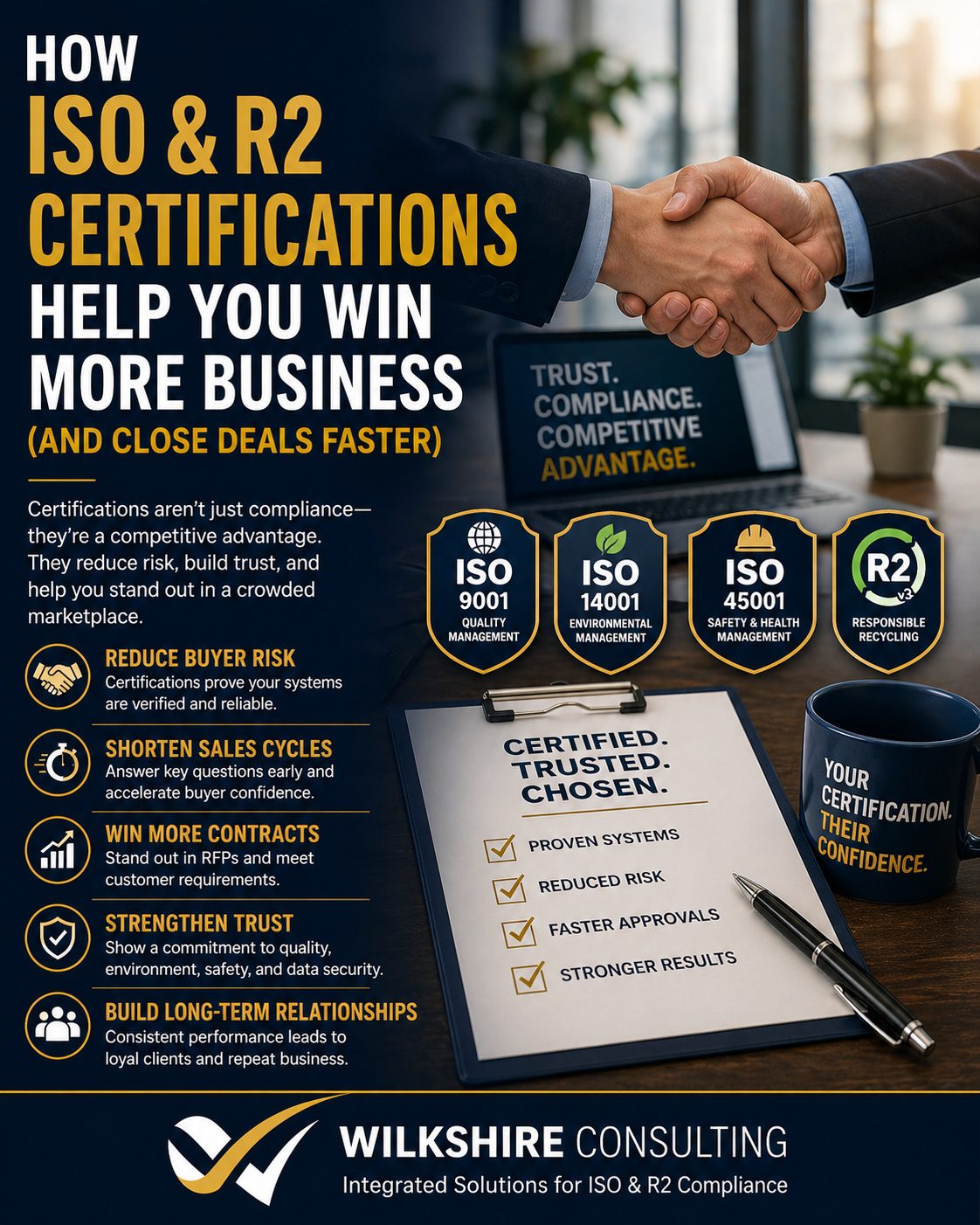
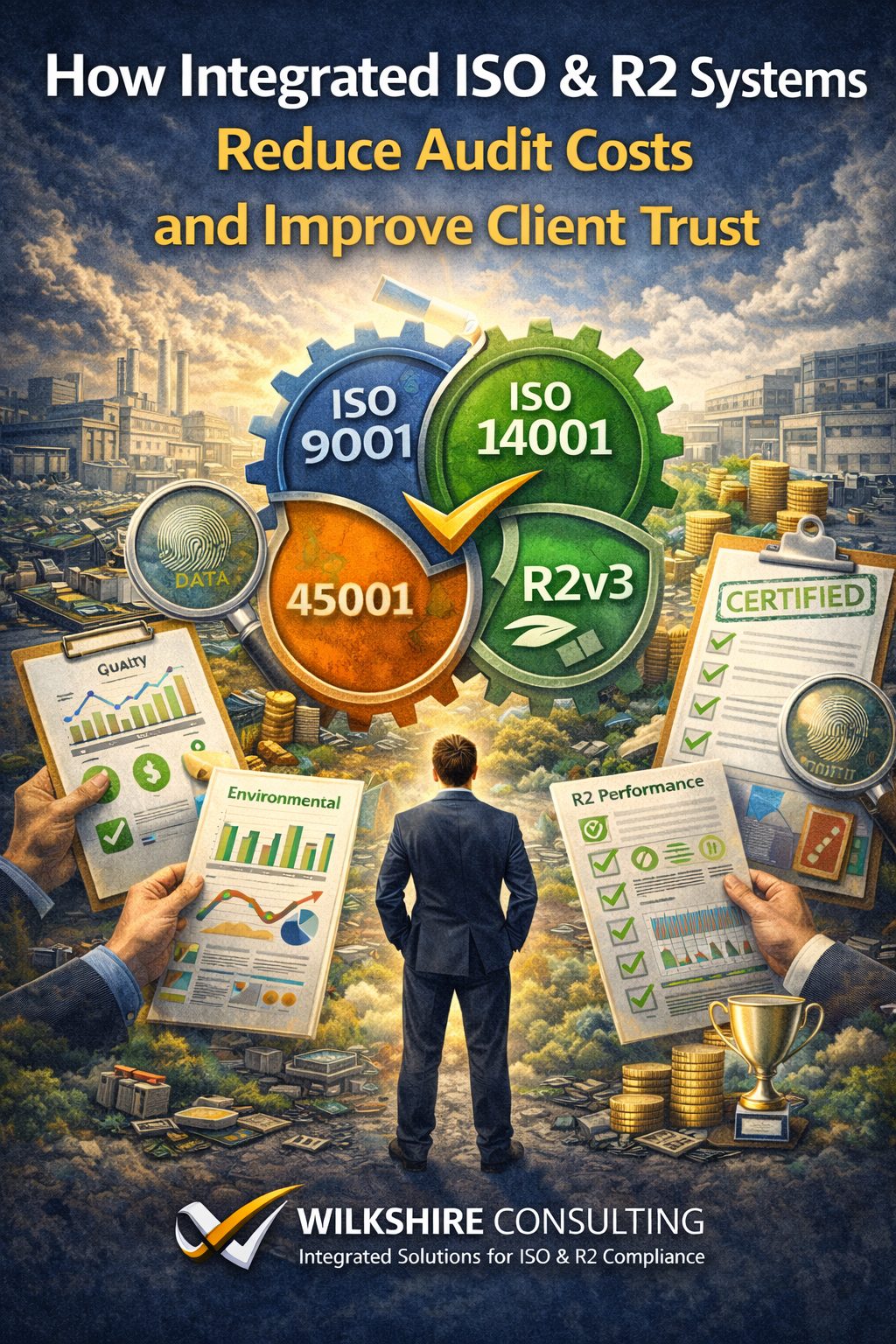
Interested in learning more about ISO & R2 integrated systems? Check out the blog below:
How Integrated ISO & R2 Systems Reduce Audit Costs and Improve Client Trust
Sustainability Requires Operational Alignment
The strongest management systems share one characteristic:
They reflect how the organization actually operates.
Procedures align with workflow.
Forms match real activity.
Records are generated naturally — not retroactively.
This alignment is what prevents 12-month failure cycles.
Leadership Engagement Determines Longevity
ISO and R2 standards place responsibility on leadership for a reason.
Sustainable systems require:
- Regular performance review
- Resource allocation
- Accountability enforcement
- Continuous improvement commitment
When leadership disengages, compliance weakens.
The Difference Between Passing and Performing
There is a difference between:
- A system that passes audits
- A system that improves operations
High-performing systems:
- Reduce risk
- Improve efficiency
- Support growth
- Build client confidence
Low-performing systems:
- Drain resources
- Create stress
- Generate recurring findings
The difference is design and maintenance discipline.
How Wilkshire Consulting Prevents 12-Month System Failure
At Wilkshire Consulting, we design ISO and R2 systems with sustainability in mind.
Our approach emphasizes:
- Practical documentation
- Clear process ownership
- Integrated system design
- Effective internal audits
- Strategic management review frameworks
We help organizations move beyond certification toward long-term performance stability.
Because implementation success isn’t measured at the certification audit — it’s measured one year later.