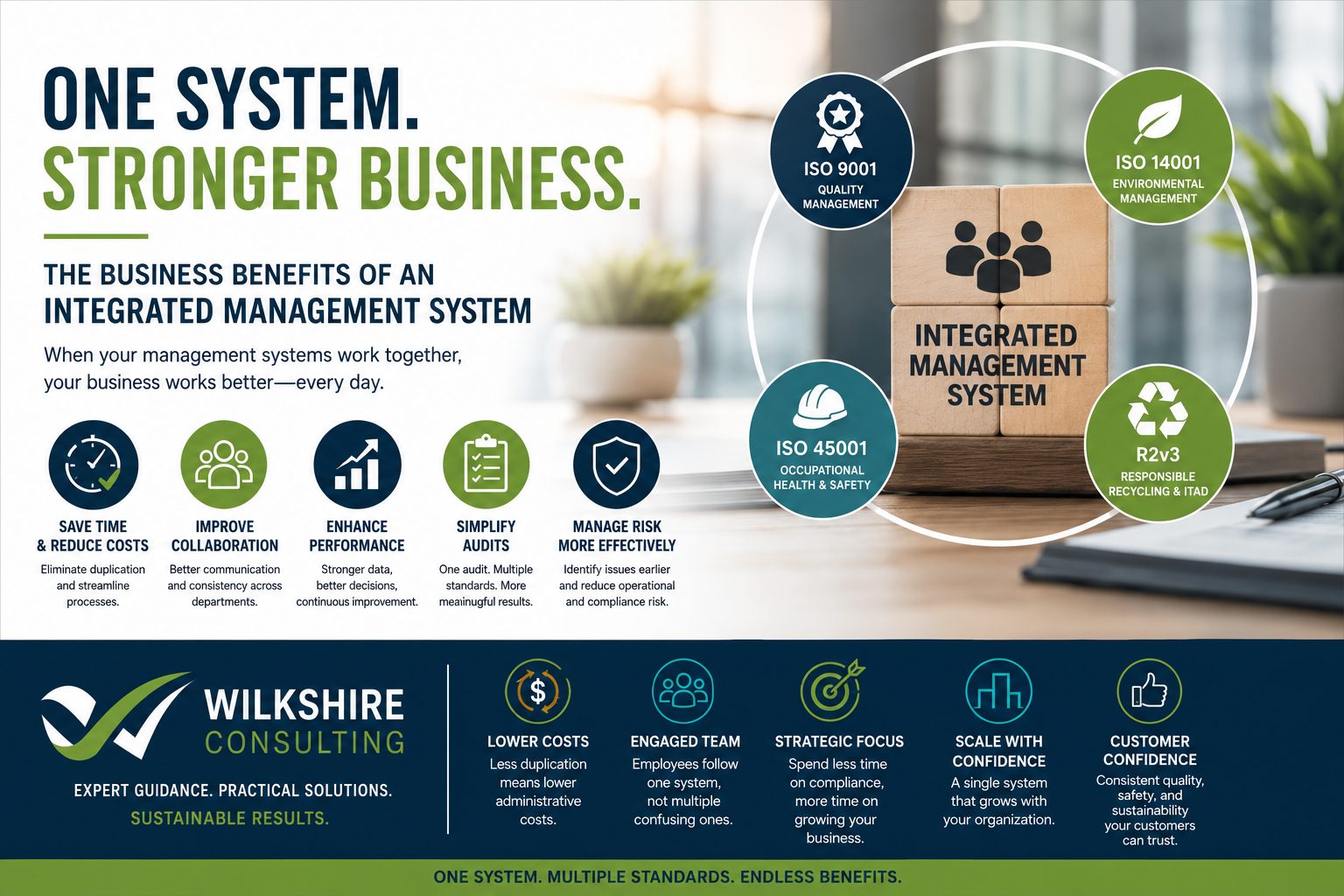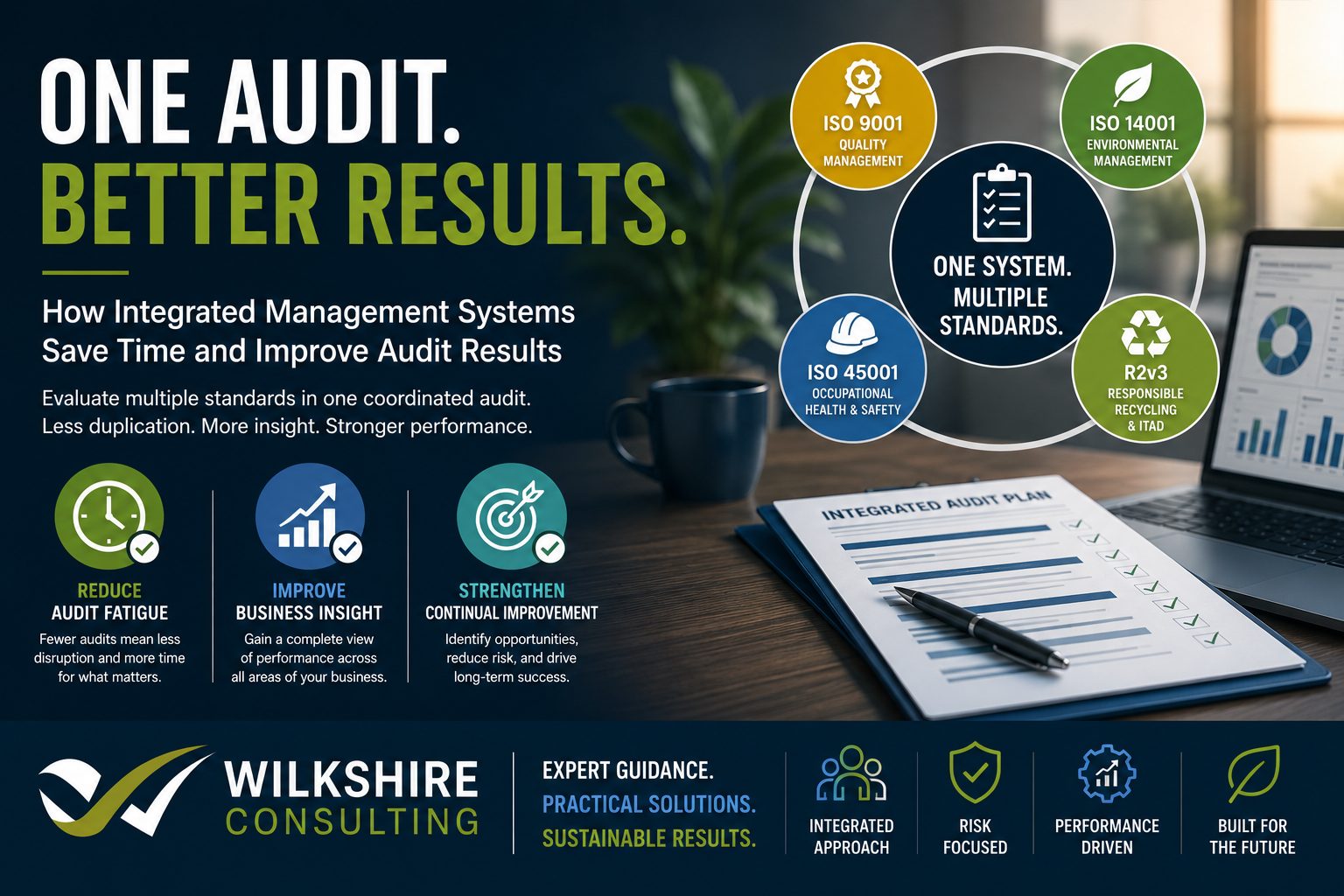
Implementing an Integrated Management System is a significant investment of time, resources, and commitment. Whether you’ve combined ISO 9001, ISO 14001, ISO 45001, R2v3, or other management standards, the goal isn’t simply to achieve certification—it’s to improve the way your business operates.
Yet many organizations make one critical mistake after completing implementation.
They stop measuring.
Passing a certification audit is certainly an important milestone, but it doesn’t automatically mean your management system is delivering long-term business value. The organizations that gain the greatest return from their management systems continuously monitor performance, identify opportunities for improvement, and make informed decisions based on meaningful data.
That’s where Key Performance Indicators (KPIs) come in.
The right KPIs help leadership understand whether the management system is improving efficiency, reducing risk, supporting employees, and helping the business achieve its objectives.
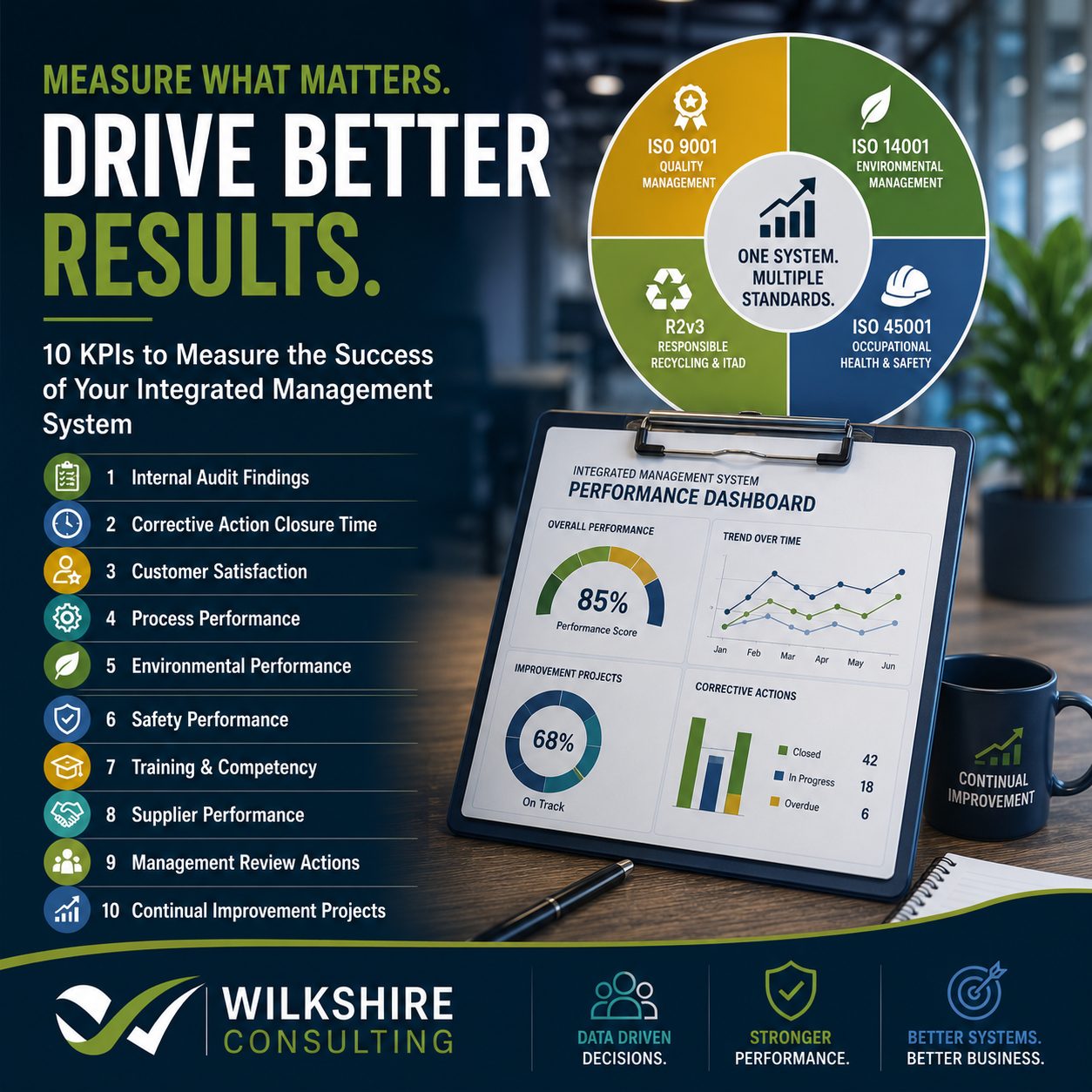
Here are ten KPIs every organization should consider tracking.
What Makes a Good KPI?
Not every metric deserves a place on your management review agenda.
A good KPI should answer an important business question.
Instead of measuring activity, it should measure performance.
For example, counting the number of internal audits completed is useful, but understanding whether those audits are identifying meaningful opportunities for improvement provides far greater value.
The best KPIs are:
- Aligned with business objectives.
- Easy to understand.
- Reviewed consistently.
- Used to support decision-making.
- Actionable when performance changes.
Remember, the goal isn’t to build an impressive dashboard—it’s to gain useful insights.
- Internal Audit Findings
Internal audits provide one of the clearest indicators of how well your Integrated Management System is functioning.
Rather than focusing solely on the number of findings, look for trends.
Ask questions such as:
- Are the same issues appearing repeatedly?
- Are findings becoming less severe over time?
- Are opportunities for improvement increasing while nonconformities decrease?
A mature management system should demonstrate continual improvement—not recurring problems.
- Corrective Action Closure Time
Identifying issues is only half the process.
Resolving them effectively is where real improvement happens.
Tracking how long corrective actions remain open can reveal:
- Resource constraints.
- Inefficient processes.
- Poor root cause analysis.
- Lack of accountability.
Organizations that consistently close corrective actions in a timely manner are generally more responsive and resilient.
- Customer Satisfaction and Complaints
Every management system should ultimately support better customer experiences.
Monitoring customer feedback can provide valuable insight into whether operational improvements are producing measurable results.
Useful metrics include:
- Customer complaints.
- Customer satisfaction surveys.
- Repeat business.
- Warranty claims.
- Customer retention.
If these indicators improve over time, your management system is likely contributing to stronger business performance.
- Process Performance
Integrated Management Systems should improve how work gets done—not simply how it’s documented.
Choose process metrics that reflect your business.
Examples include:
- On-time delivery.
- Production efficiency.
- Scrap rates.
- Rework.
- Equipment downtime.
- Cycle times.
Improving operational performance is often one of the strongest indicators that integration is working.
- Environmental Performance
For organizations certified to ISO 14001, environmental performance should be monitored alongside operational performance.
Potential KPIs include:
- Energy consumption.
- Water usage.
- Waste generation.
- Recycling rates.
- Environmental incidents.
- Emissions where applicable.
These indicators help organizations identify opportunities to reduce environmental impact while often lowering operating costs.
- Health and Safety Performance
For organizations implementing ISO 45001, measuring workplace safety is essential.
Effective KPIs may include:
- Recordable incidents.
- Near-miss reporting.
- Corrective actions related to safety.
- Safety observations.
- Training completion.
- Lost-time injuries.
A strong safety culture is often reflected by increased reporting of near misses and proactive improvements—not simply low injury numbers.
- Training and Employee Competency
Even the best management system will struggle if employees don’t understand their responsibilities.
Monitor indicators such as:
- Training completion rates.
- Competency evaluations.
- Cross-training initiatives.
- Employee awareness of procedures.
- Refresher training participation.
Well-trained employees create more consistent processes and fewer operational surprises.
- Supplier Performance
Your management system doesn’t stop at your facility doors.
Supplier performance has a direct impact on quality, delivery, environmental objectives, and customer satisfaction.
Common KPIs include:
- On-time supplier delivery.
- Supplier quality issues.
- Incoming inspection failures.
- Supplier corrective actions.
- Approved supplier performance ratings.
Strong supplier relationships contribute to stronger organizational performance.
- Management Review Action Completion
Management Reviews shouldn’t end with meeting minutes.
Every action item should move the organization forward.
Tracking completion rates helps ensure that leadership decisions become meaningful improvements rather than forgotten discussions.
Questions to consider include:
- Are action items completed on time?
- Are assigned responsibilities clear?
- Are improvements producing measurable results?
Leadership engagement is one of the strongest drivers of continual improvement.
- Continual Improvement Projects
One of the clearest signs of a healthy Integrated Management System is a culture of continual improvement.
Track improvements such as:
- Process improvement initiatives.
- Cost-saving projects.
- Waste reduction efforts.
- Employee improvement suggestions.
- Technology upgrades.
- Risk reduction initiatives.
Improvement should become part of everyday operations—not something that only happens before an audit.
Don’t Measure Everything—Measure What Matters
One of the biggest mistakes organizations make is trying to monitor dozens of different metrics.
More data doesn’t automatically lead to better decisions.
In fact, too many KPIs often make it harder to identify what truly matters.
Instead, focus on a manageable group of meaningful indicators that reflect your organization’s objectives and review them consistently.
A simple dashboard that leadership actively uses is far more valuable than a complicated report that no one reads.
Turning Data Into Better Decisions
Collecting KPIs is only the first step.
The real value comes from understanding what those numbers are telling you.
When trends are reviewed regularly, organizations can identify risks earlier, prioritize improvement opportunities, allocate resources more effectively, and make better strategic decisions.
That’s where an Integrated Management System becomes much more than a compliance tool.
It becomes a management tool.
How Wilkshire Consulting Helps Organizations Measure Success
At Wilkshire Consulting, we believe a successful management system should do more than help you pass an audit.
It should provide leadership with meaningful information that supports smarter business decisions.
We help organizations:
- Develop practical KPI dashboards.
- Align performance metrics with business objectives.
- Improve Management Reviews.
- Strengthen continual improvement programs.
- Integrate reporting across multiple management standards.
- Build management systems that create lasting value—not just certification.
Our goal is to help organizations transform data into decisions that improve performance year after year.
Ready to Get More Value From Your Management System?
Whether your organization is implementing its first management system or looking to improve an existing Integrated Management System, measuring the right KPIs can help you make better decisions, reduce risk, and drive continual improvement.